
The History of the Bookwalter Retractor

The history of surgical exposure reached a major turning point in the late 1970s with the invention of the Bookwalter Retractor. Before its development, open abdominal and pelvic operations relied on surgical assistants holding manual steel blades for hours at a time—a practice fraught with muscle fatigue, obstructed visual fields, and variable traction force. Dr. John R. Bookwalter, an American general surgeon, solved these problems by engineering a modular, table-mounted ring-and-post framework that secured tissue mechanically. This historical overview traces the system’s development from early operating room challenges to its standing as a core standard in modern surgery.
Introduction
In open surgical procedures, visibility is the foundation of safety. A surgical team cannot dissect fine vascular structures, identify retroperitoneal nerves, or resect deep tissue masses without continuous, unobstructed access to the operative cavity. For more than a century, achieving this level of exposure was one of the most physically demanding aspects of open surgery.
Throughout much of the 20th century, holding back muscle layers, subcutaneous fat, and abdominal organs was accomplished by junior surgeons, surgical residents, and scrub nurses holding manual metal retractors—such as Balfour, Deaver, and Richardson instruments. This reliance on human effort meant that surgical exposure was subject to assistant fatigue, subtle hand tremors, uneven tissue tension, and physical crowding around the surgical wound.
The introduction of the Bookwalter Retractor in the late 1970s fundamentally altered this dynamic. By anchoring a circumferential ring frame directly to the operating table rail and using notched sliding ratchets to lock retractor blades in place, the system replaced manual effort with stable mechanical tension.
This article details the history of the Bookwalter Retractor, exploring the surgical challenges that inspired its invention, the design principles that made it successful, its clinical impact over the decades, and how modern manufacturing maintains Dr. Bookwalter’s original vision.
Surgical Exposure Before the Bookwalter Era
To understand the impact of Dr. Bookwalter’s invention, one must examine operating room conditions in the mid-20th century. During long laparotomies, deep pelvic resections, or retroperitoneal dissections, maintaining wound margin retraction required constant physical exertion.
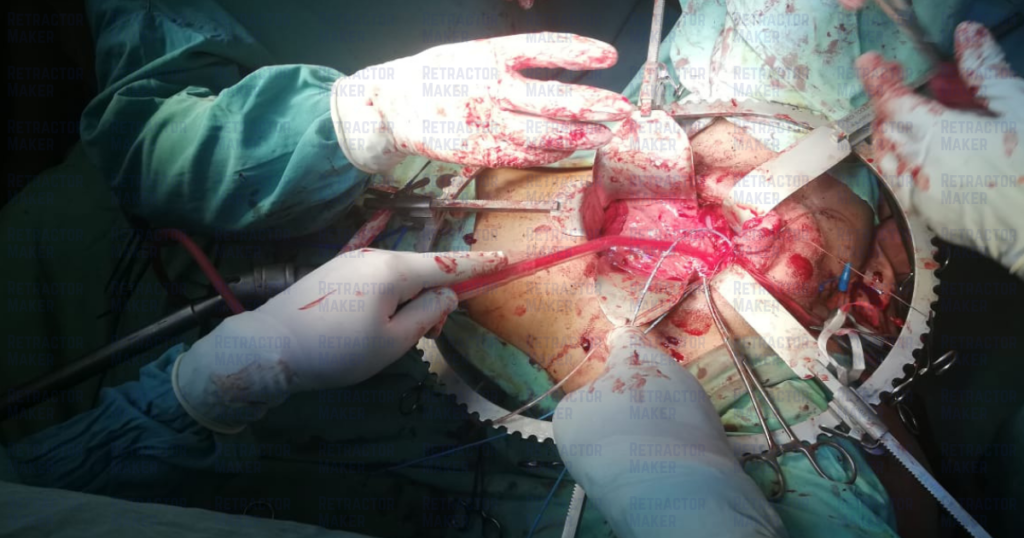
Prior to table-mounted systems, surgical exposure presented four primary clinical challenges:
- Assistant Muscle Fatigue: Holding heavy manual blades against dense abdominal wall muscles for three to six hours caused physical exhaustion. As assistants grew tired, their hands naturally drifted, leading to loss of visual exposure during critical moments of dissection.
- Inconsistent Retraction Tension: Human hands cannot maintain perfectly static tension over extended periods. Minor shifts in force could cause retractor blades to slip off tissue margins, creating sudden variations in wound depth.
- Physical Crowding at the Incision: Having two or three assistants standing tightly around the surgical site restricted physical room for the lead surgeon and scrub nurse, while also blocking overhead surgical lighting.
- Limitations of Early Mechanical Retractors: Early self-retaining instruments, such as basic abdominal spreaders or rigid floor-standing frames, were bulky, slow to adjust, and provided limited traction vectors inside deep pelvic cavities.
Who Was Dr. John Bookwalter?
Dr. John R. Bookwalter was an American general surgeon practicing in Vermont and Massachusetts. Throughout his surgical training and early career in the late 1960s and early 1970s, Dr. Bookwalter routinely experienced the practical frustrations of maintaining surgical exposure during deep abdominal operations.
Recognizing that operating room efficiency and surgical safety depended heavily on consistent wound exposure, Dr. Bookwalter began experimenting with modified retractor designs. He sought to create a system that was robust, straightforward to clean and sterilize, adaptable to varying patient anatomies, and capable of being adjusted quickly by a single operator.
Working in collaboration with biomedical engineers and surgical instrument manufacturers, Dr. Bookwalter developed and refined a prototype that utilized a central table-mounted post, an overhead horizontal bar, a circumferential ring frame, and quick-connect sliding ratchets. His design received patent approval in the late 1970s and was subsequently commercialized, rapidly gaining widespread adoption in surgical departments across North America and Europe.
Why the Bookwalter Retractor Was Developed
The development of the Bookwalter Retractor was driven by clinical necessity. Dr. Bookwalter identified specific operational problems in open general, urological, and gynecological surgery and engineered structural solutions for each:
Comparison: Manual Retraction vs. Bookwalter Retractor System
| Retraction Paradigm | Physical Load Bearer | Exposure Stability | Visual Corridor | Adjustment Speed |
| Manual Handheld Retraction | Surgical Assistants & Scrub Staff | Variable (Subject to fatigue and drift) | Obstructed by hands & handles | Slow (Requires verbal commands & re-gripping) |
| Bookwalter Table-Mounted System | Operating Table Side Rail | Static (Mechanical ratchet lock) | Unobstructed 360-degree overhead field | Fast (Single-handed ratchet movement) |
Key Problems Solved by the Design:
- Elimination of Human Fatigue: By securing the vertical mounting post to the operating table rail, the physical force needed to hold back heavy tissue was transferred to the steel base of the table.
- 360-Degree Radial Retraction Vectors: Earlier spreaders only provided linear (two-way) traction. The circumferential ring frame permitted surgeons to attach retractor blades at any angle around the incision, allowing multi-directional traction simultaneously.
- Incremental Retraction Control: Spring-loaded ratchet pawls engaging notched blade shanks enabled surgeons to fine-tune tissue tension in precise increments.
- Hands-Free Surgical Access: Freeing assistants from manual holding allowed them to assist with active surgical tasks—such as suctioning, electrocautery, and instrument passing—improving overall team efficiency.
The Engineering Breakthrough: Core Design Principles
The success of the Bookwalter Retractor rested on its modular, interconnected architecture. Rather than building a single rigid instrument, Dr. Bookwalter created a versatile system of standardized structural components.
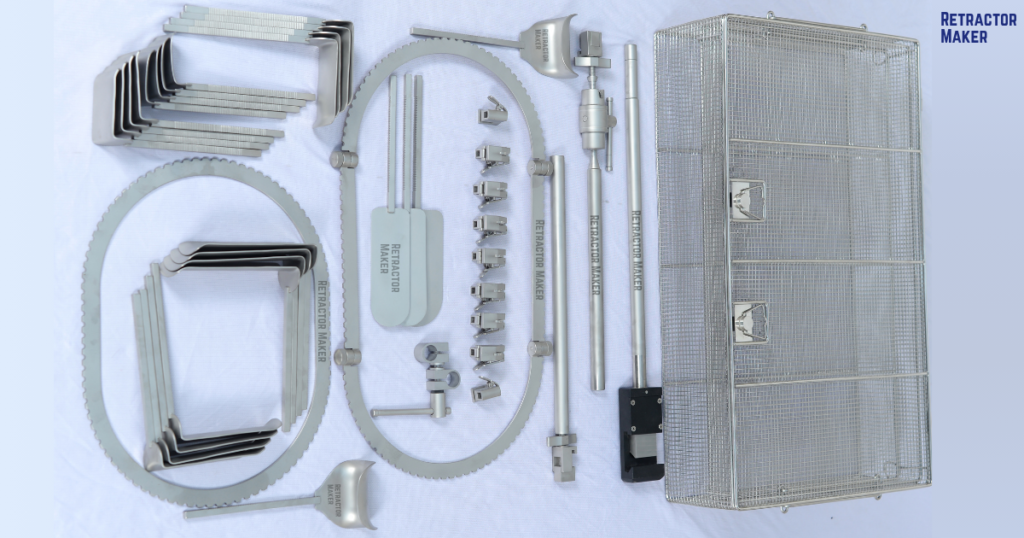
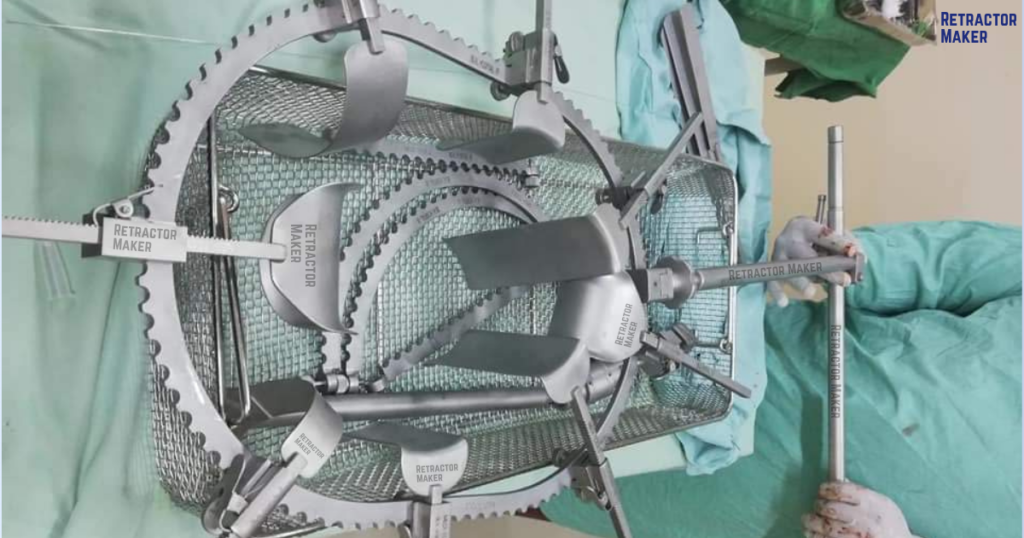
1. The Rail Foundation (Post Coupler & Field Post)
The mechanical chain begins at the side rail of the operating table. A heavy-duty post coupler clamps over the surgical drapes directly onto the rail, anchoring a solid 12-inch vertical field post. This establishes a stable mounting base independent of the patient’s body.
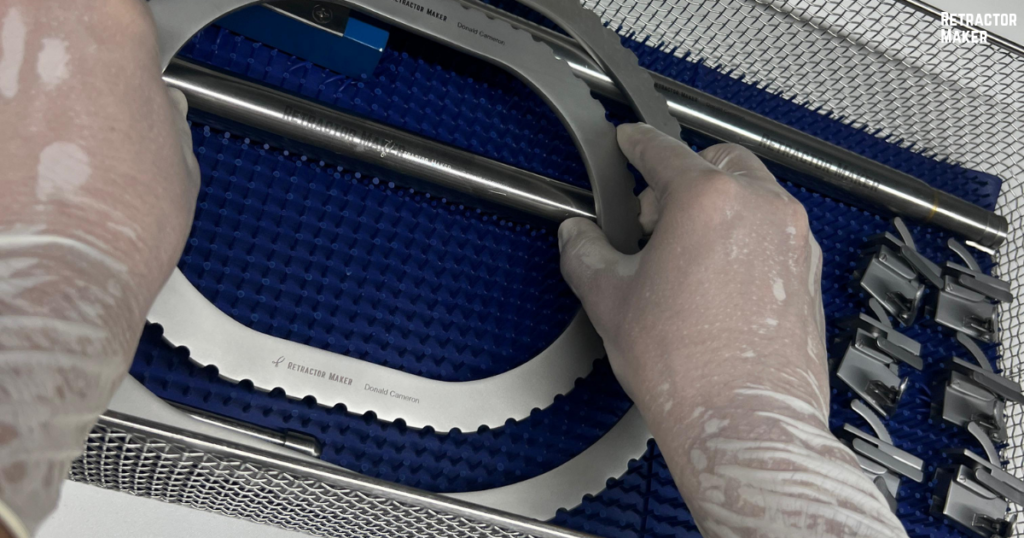
2. The Overhead Suspension (Horizontal Flex Bar & Ring)
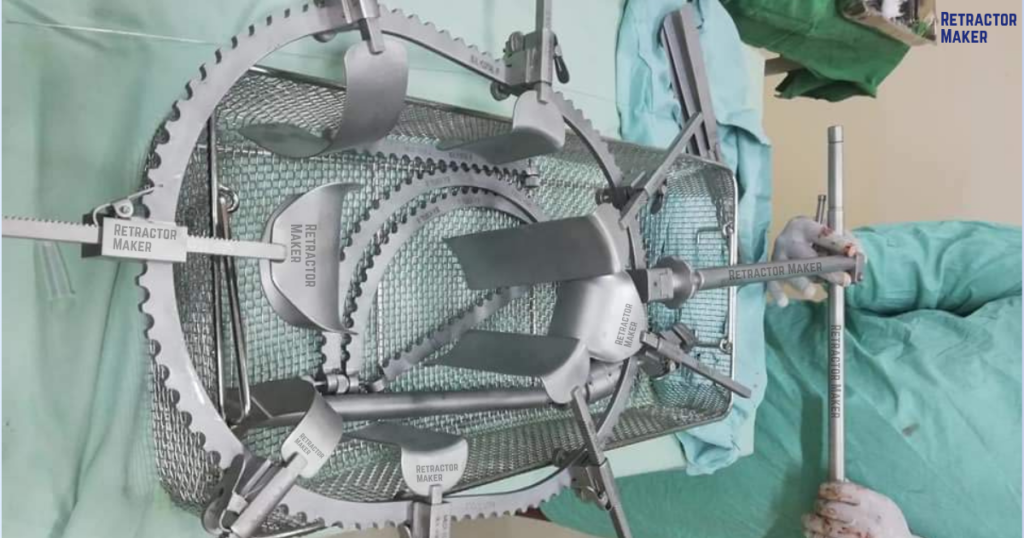
An articulated horizontal flex bar connects to the top of the field post, extending over the torso to suspend a central ring frame directly above the surgical site. The introduction of hinged segmented rings enabled the frame to fold upward or downward, conforming to non-planar abdominal walls and curved patient contours.
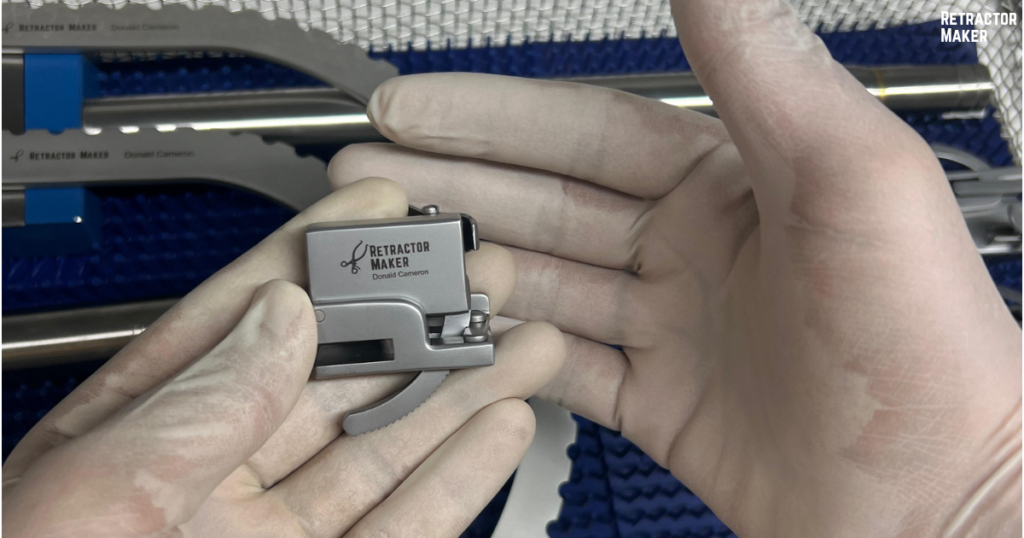
3. Incremental Locking (Ratchets & Notched Blades)
The ratchet mechanism served as the functional link between the ring frame and the tissue blade. By clipping onto the ring rim, the ratchet engaged a series of notches machined into the blade shank. The addition of tilt ratchets allowed surgeons to tilt blade tips downward into deep pelvic corridors, adding vertical tissue lift to standard lateral traction.
Evolution of the Bookwalter System Over the Decades
Since its initial introduction in the late 1970s, the Bookwalter system has undergone steady engineering refinements to enhance its versatility, material durability, and cleaning efficiency.
Key Milestones in Development:
- Introduction of Articulated Flex Bars: Early models utilized rigid horizontal arms that required precise vertical post adjustments. The introduction of the articulated flex bar allowed multi-angle positioning using a single central locking handle.
- Development of Tilt Ratchets: Standard slide-on ratchets maintained blades at a fixed 90-degree angle relative to the ring. Tilt ratchets introduced internal gearing that enabled variable pitch angles, improving deep pelvic and subcostal retraction.
- Expanded Blade Geometries: The blade family expanded beyond standard Kelly and Balfour profiles to include malleable blades, sweetheart Harrington blades, toothed Meyerding blades, deep rectal blades, and multi-prong hooks.
- Sterilization and Reprocessing Improvements: Modern systems transitioned to un-welded, smooth-contoured stainless steel components paired with perforated tray containers to optimize automated washing and steam autoclave penetration.
Impact on Modern Surgery and Operating Room Efficiency
The widespread adoption of the Bookwalter Retractor had a lasting impact on open surgical practice across multiple disciplines.
Primary Operational Benefits:
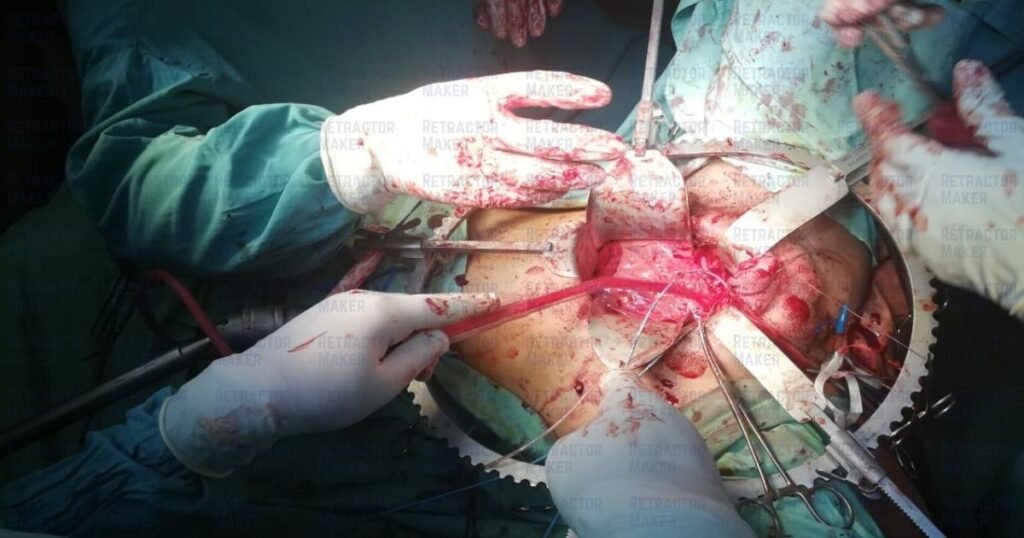
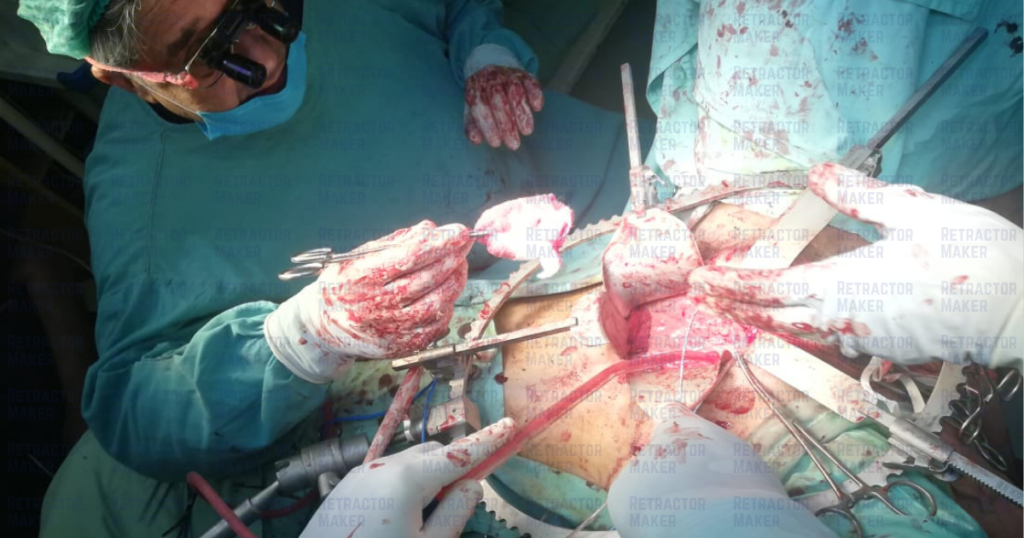
- Improved Surgical Field Visibility: Maintaining constant, non-slip tissue tension ensures that deep anatomical structures remain visible throughout dissection, reducing the risk of accidental organ or vessel injury.
- Optimization of Operating Staff: By eliminating the need for assistants to manually hold retractors, personnel can focus on technical tasks such as suture management, electrocautery, and suctioning.
- Broader Surgical Applications: While developed initially for general abdominal surgery, the system became standard equipment in urology (nephrectomies, kidney transplants), gynecology (hysterectomy, tumor debulking), colorectal surgery, and vascular operations (abdominal aortic aneurysm repair).
- Enhanced Training Environment: In teaching hospitals, hands-free retraction allows attending surgeons and residents to view the operative field simultaneously without obstruction.
How Today’s Bookwalter-Style Systems Honor the Original Principles
Modern table-mounted retractor manufacturing continues to rely on Dr. Bookwalter’s foundational engineering concepts: table-rail anchoring, 360-degree ring perimeter access, and quick-connect ratchet mechanisms.
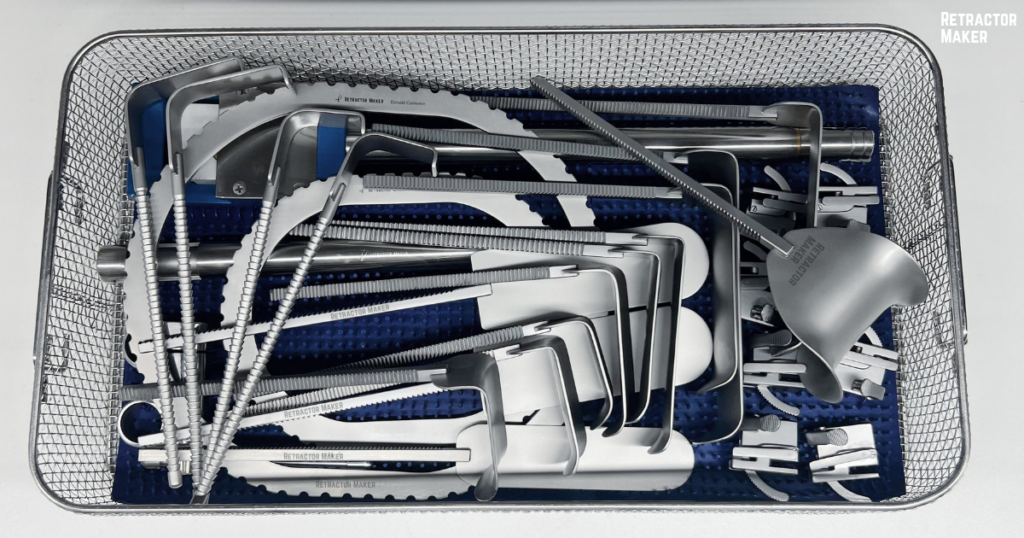
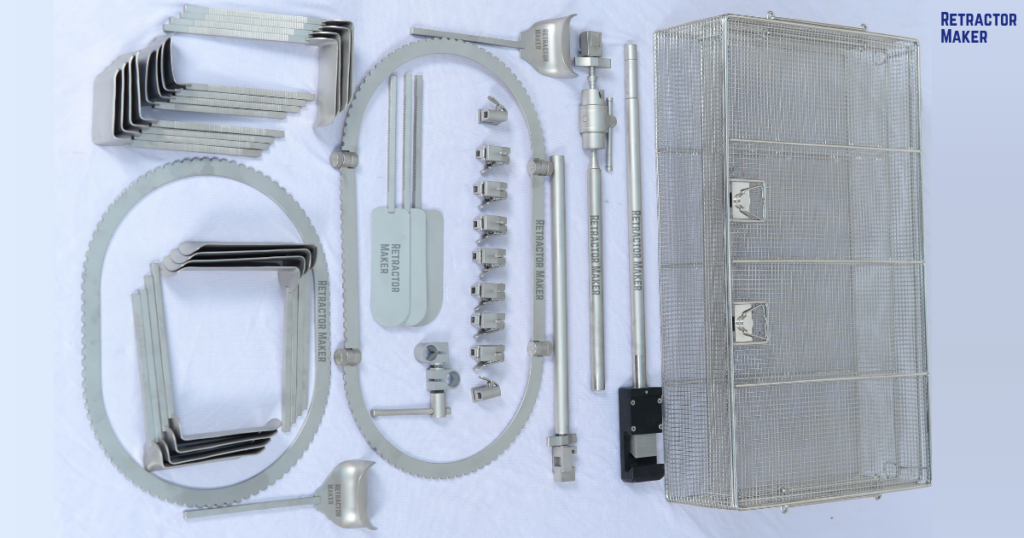
Standard System Component Inventory
| Component Name | Standard Kit Quantity | Historical Purpose & Function |
| Bookwalter Field Post (12″) | 1 | Vertical support column elevating assembly above sterile field |
| Bookwalter Post Coupler | 1 | Heavy-duty side rail clamp anchoring system to table frame |
| Bookwalter Horizontal Flex Bar | 1 | Articulated extension arm positioning ring over incision |
| Bookwalter Standard Ratchets | 2 | Linear friction locks holding blades at fixed 90-degree angles |
| Bookwalter Tilt Ratchets | 7 | Variable-pitch ratchets providing vertical lift and deep angle access |
| Medium Oval Ring | 1 | Rigid 360-degree perimeter track matching standard laparotomies |
| Medium Segmented Ring | 1 | Jointed frame folding to match curved abdominal walls |
| Sterilization Organizer Box | 1 | Perforated tray system ensuring thorough steam sterilization |
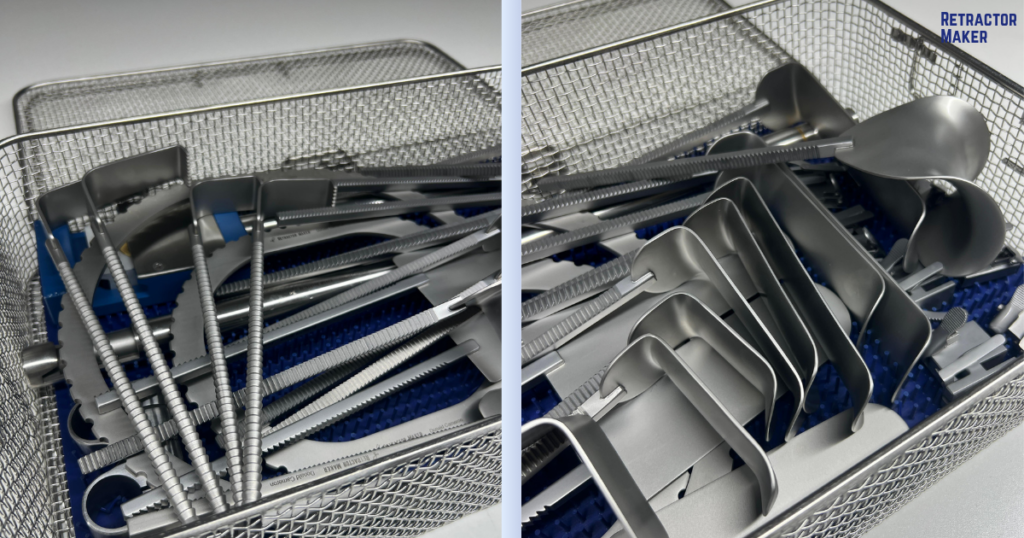
Today, advanced manufacturing techniques—including computer-controlled machining, non-reflective satin surface finishing, and laser-etched component identification—have refined these instruments further. Manufacturing standardization ensures that standalone replacement parts (such as individual ratchets, post couplers, or specialized blades) remain compatible with existing hospital retractor sets worldwide.
Explore Our Complete Corporate Network
As a specialized global manufacturer of self-retaining surgical retractor systems, our corporate manufacturing network serves healthcare facilities, surgical centers, and medical distributors across multiple specialized surgical domains:
- Retractor Maker — Explore our complete corporate catalog of self-retaining retractor systems, specialized table-mounted systems, and custom OEM manufacturing capabilities across all surgical disciplines.
- Leyla Retractor — Discover our dedicated product line of specialized Leyla neurosurgical retractor systems, flexible holding arms, cranial fixation clamps, and neurosurgical accessories.
Frequently Asked Questions (FAQs)
Who invented the Bookwalter Retractor and when?
Dr. John R. Bookwalter, an American general surgeon, invented the system in the late 1970s to solve assistant fatigue and inconsistent surgical exposure during open surgery.
What main clinical problem did the Bookwalter Retractor solve?
It eliminated the reliance on manual tissue retraction by transferring the physical load directly to the operating table rail via a rigid post and ring framework.
Why is the ring frame design significant?
The 360-degree ring frame surrounds the incision, allowing surgical teams to attach retractor blades at any angle around the wound for multi-directional traction.
What is the difference between a standard ratchet and a tilt ratchet?
A standard ratchet holds the blade at a fixed 90-degree angle relative to the ring, while a tilt ratchet allows variable pitch angles to tilt blade tips downward into deep anatomical cavities.
Are modern Bookwalter-style replacement parts compatible with older systems?
Yes. Quality replacement components are manufactured to standard industry specifications, featuring universal notched handle shanks and post sizes for integration with existing hospital trays.
What materials are used to build modern Bookwalter systems?
Modern systems are forged from high-tensile, non-magnetic, surgical-grade stainless steel with anti-glare satin finishes to withstand repeated high-temperature steam sterilization.
What surgical specialties commonly use the Bookwalter Retractor today?
It is used extensively in general surgery, urology, gynecology, colorectal surgery, hepatobiliary surgery, transplant operations, and open vascular procedures.
Conclusion
The history of the Bookwalter Retractor demonstrates how a well-engineered solution to a practical clinical problem can transform surgical practice. Dr. John Bookwalter’s vision of a modular, table-mounted system successfully addressed assistant fatigue, crowded surgical fields, and unstable wound traction.
Decades after its introduction, the fundamental mechanics of the Bookwalter Retractor remain central to open surgical exposure. By combining table-rail anchoring, 360-degree ring perimeter access, and incremental ratchet locking, the system continues to provide the stability and visibility required for complex surgical procedures worldwide.
To explore complete table-mounted setups, specialized retractor blades, or standalone replacement hardware, view our full catalog in the Bookwalter Retractors Category or review the primary Bookwalter Retractor System. You can also examine our corporate catalog at Retractor Maker and specialized neurosurgical solutions at Leyla Retractor.
Request Your B2B Quotation
Retractor Maker is a specialized manufacturer supplying factory-direct table-mounted retractor systems, replacement components, and surgical accessories to hospitals, surgical centers, medical distributors, and procurement teams worldwide.
Contact Us — Speak directly with our manufacturing specialists regarding bulk orders or OEM requests.
Request a Quote Now — Receive formal B2B pricing and fulfillment timelines.
Download Product Catalogue — Access complete technical specifications and part lists.
Your ability to blend thought-provoking ideas with evocative language is truly remarkable. Every sentence seems to unlock a new door to understanding, leading the reader to a richer, fuller interpretation of the world around them. It’s rare to come across writing that does more than just tell a story — your words create entire worlds, and I found myself lost in them, not wanting to leave.