
Écarteurs Bookwalter
Qu'est-ce qu'un écarteur Bookwalter ?
Vérifié par Retractor Maker technical team · Mis à jour
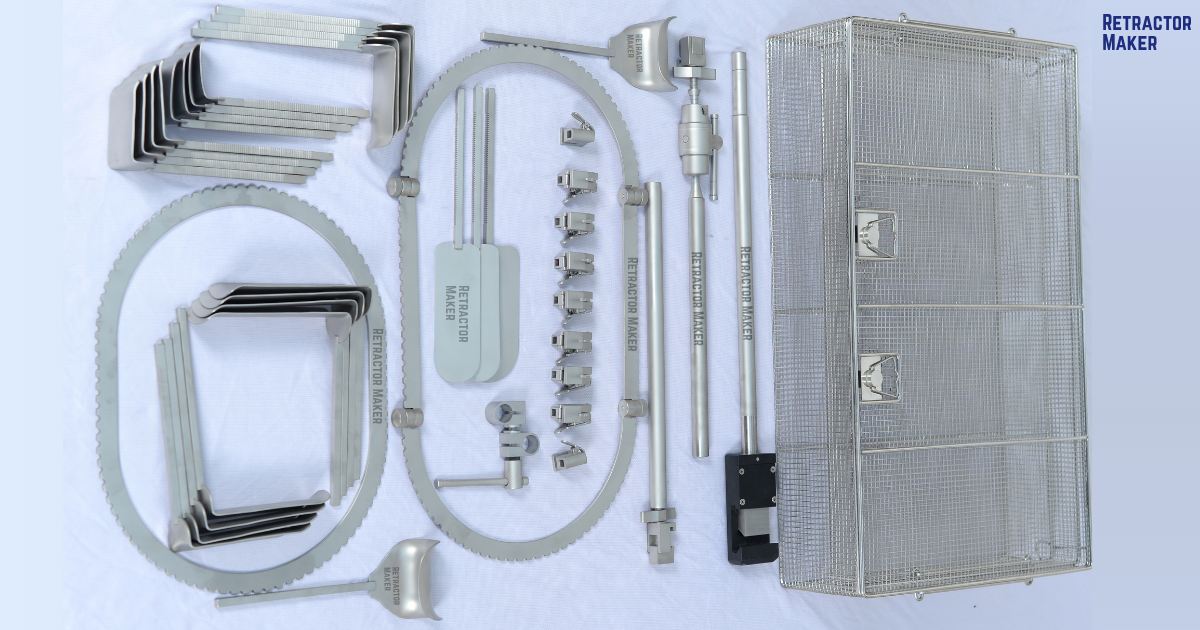
Un écarteur Bookwalter est un système d'écarteur chirurgical autostatique monté sur table. Il utilise un cadre de support, un anneau d'écarteur, des mécanismes à cliquet et des lames d'écarteur pour aider à maintenir la rétraction des tissus et l'accès au champ opératoire pendant la chirurgie ouverte.
A Bookwalter Retractor is a table-mounted, self-retaining surgical retractor system. It is designed to help maintain tissue retraction and provide access to the operative field during open surgery, without an assistant holding a retractor by hand.
The system works as an assembly rather than a single instrument. A supporting framework is attached to the operating table, a retractor ring provides attachment points around the incision, ratchet mechanisms hold the retractor blades, and the blades engage the tissue. Each element can be adjusted to suit the exposure the surgical team needs.
What Is a Bookwalter Retractor Used For?
The general purpose of the system is to hold tissue away from the operative field in a stable, adjustable way for the duration of the procedure. Depending on the configuration selected, it may help provide:
- Stable tissue retraction throughout the procedure
- Hands-free retraction, so the team is not occupied holding instruments
- Access to the operative field
- Adjustable positioning of retractor blades around the incision
- A stable retraction framework anchored to the operating table
Bookwalter Retractor systems may be used in areas such as general surgery, urology, gynecology, and other open surgical procedures where a self-retaining retraction system is appropriate. Not every configuration is suitable for every procedure — the components and blades have to match the surgical requirement.
How Does a Bookwalter Retractor Work?
The operating concept is straightforward. The load of the retraction is carried by the operating table instead of by an assistant.
- The supporting structure is attached to the operating table.
- Bars and other support components form the retraction framework.
- A retractor ring, or a related framework, provides the attachment points.
- Ratchet mechanisms clamp to that framework and hold the retractor blades.
- Blades are positioned around the operative field where retraction is needed.
- The assembly is then adjusted to provide the required exposure.
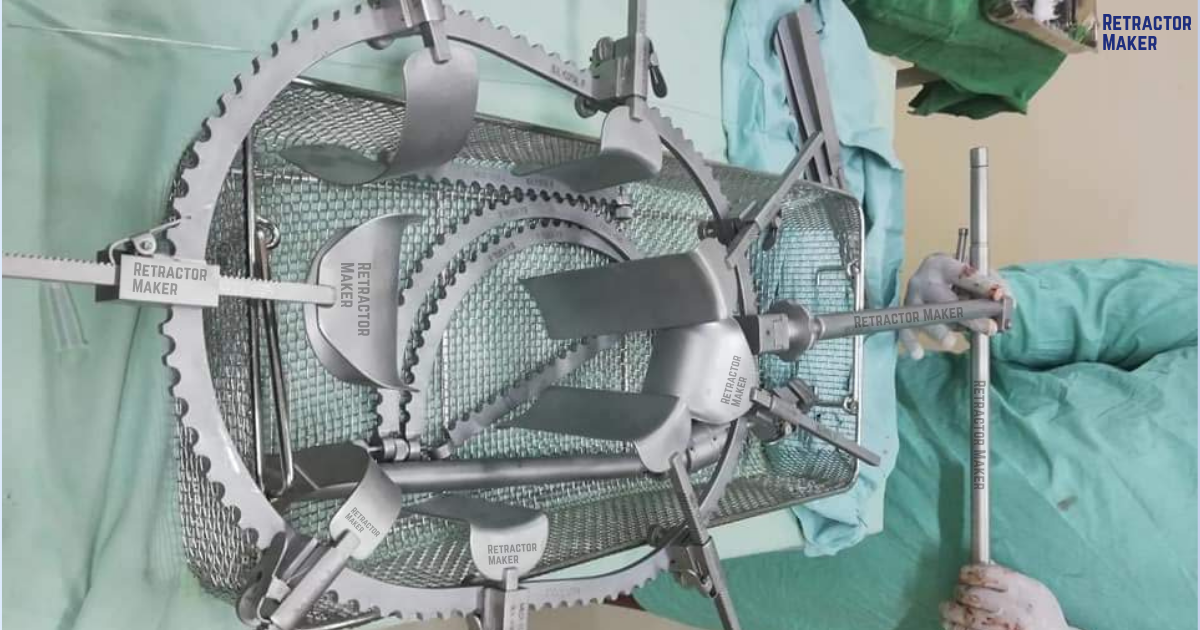
This is a general educational explanation, not instructions for use. Actual assembly and use should follow the manufacturer's instructions and the procedures of the healthcare facility, and should be carried out by appropriately trained surgical professionals.
Main Components of a Bookwalter Retractor
A Bookwalter-style set is built from a small number of component families. Knowing the names makes it much easier to identify a replacement part or specify a new set.
- Field post — the upright that supports the retractor framework.
- Horizontal bar — provides structural support for the system.
- Horizontal flex bar — helps position the retraction framework.
- Post coupler — connects supporting components together.
- Retractor rings — provide the framework for attaching retraction mechanisms.
- Ratchet mechanisms — hold and position the retractor blades.
- Retractor blades — provide the tissue retraction.
| Component | Basic Function |
|---|---|
| Field Post | Supports the retractor framework |
| Horizontal Bar | Provides structural support for the system |
| Horizontal Flex Bar | Helps position the retraction framework |
| Post Coupler | Connects supporting components |
| Retractor Ring | Provides a framework for attaching retraction mechanisms |
| Ratchet Mechanism | Holds and positions retractor blades |
| Retractor Blades | Provide tissue retraction |
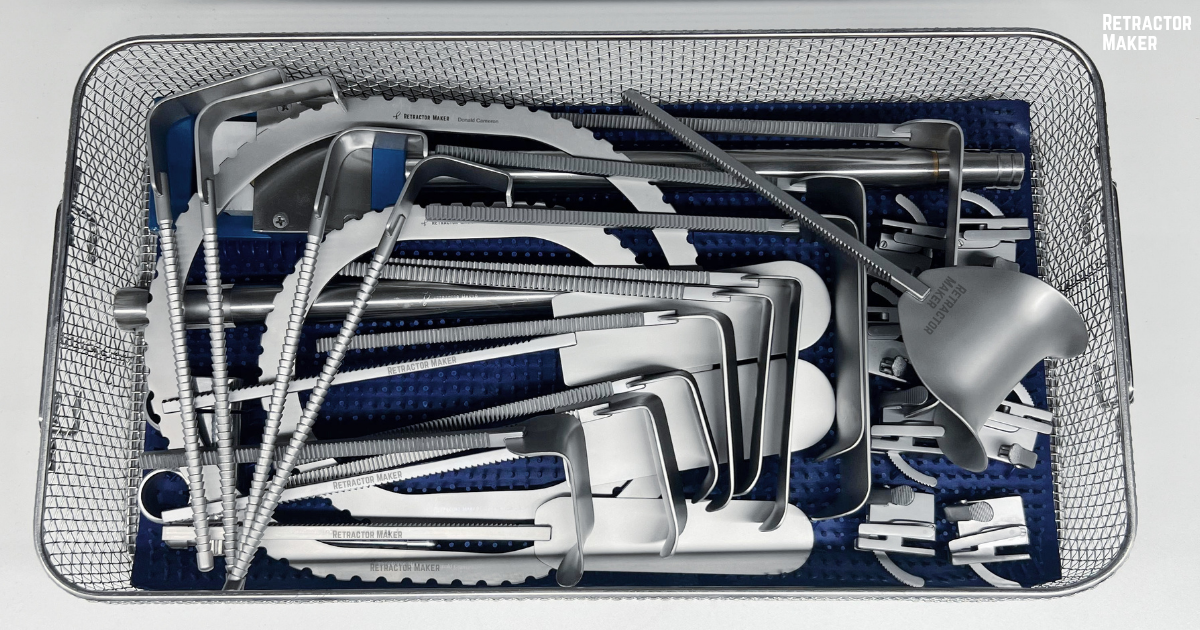
Bookwalter Retractor Blades
The system can be used with different retractor blades depending on the exposure required and the configuration of the frame. Blades are usually the part of a set that changes most between specialties, while the supporting hardware often stays the same.
- Kelly blades — a deeper profile used where the wall must be held further back.
- Malleable blades — shaped by the surgical team to follow the anatomy where a fixed profile does not fit.
- Other Bookwalter-compatible blade configurations, including Balfour-style, Richardson, Deaver, Harrington and specialised profiles.
Blade width, depth and design all affect how the retraction system is configured, including how many ratchet mechanisms are needed and where they sit on the ring. The right blade depends on the procedure and the surgeon's requirement rather than on any single blade being best. You can see the available profiles on the Bookwalter retractor blades page.
How Is a Bookwalter Retractor Set Up?
A general overview of the working order is:
- Position the support structure on the operating table.
- Attach the required bars and connecting components.
- Position the retractor ring or framework above the operative site.
- Attach the appropriate ratchet mechanisms.
- Select suitable retractor blades.
- Position and adjust the blades as required.
- Check the overall setup before use.
This is a general educational overview only. It is not a replacement for the manufacturer's instructions for use or for institutional surgical procedures.
Where Is a Bookwalter Retractor Used?
General Surgery
In general surgery, a table-mounted system may be used as a self-retaining retraction system in applicable open procedures where stable exposure of the operative field is required.
Urology
Table-mounted retraction systems may be used in appropriate open urological procedures when stable exposure is required and a self-retaining system is considered suitable.
Gynecology
Suitable Bookwalter configurations may be used in gynecological procedures where retraction and operative exposure are required. Ring geometry and blade depth are normally selected to match the approach.
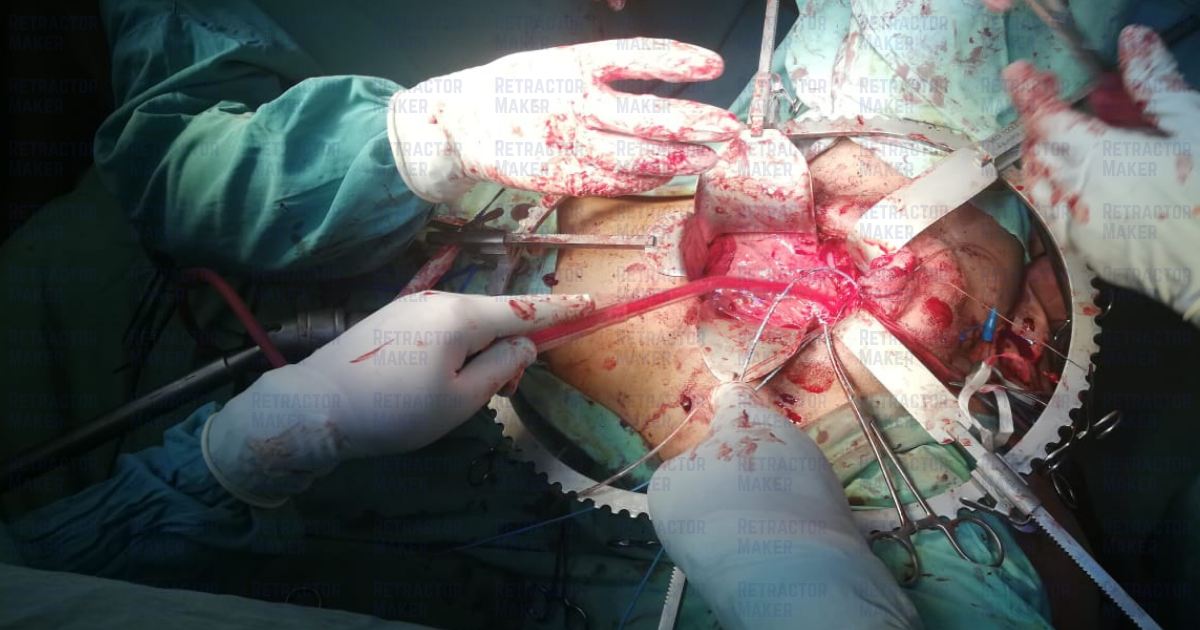
Bookwalter Retractor vs. Hand-Held Retractors
Hand-held retractors generally need to be held in position by a surgeon or an assistant for as long as the exposure is needed. A self-retaining Bookwalter system instead uses a supporting framework and ratchet mechanisms to maintain the position of the retractor blades.
Neither approach is universally better. The appropriate retraction method depends on the procedure, the operative requirements, surgeon preference and the equipment available in the theatre.
How to Choose a Bookwalter Retractor Configuration
Configuration is decided by the surgical requirement. Factors that usually need to be considered include:
- The type of procedure the set must cover
- The operative exposure required
- The surgical field and the approach used
- Ring configuration — shape and size
- Blade type
- Blade size, including width and depth
- The number of retraction points needed around the field
- The supporting components available, such as posts, bars and couplers
Because these factors vary between theatres and specialties, there is no single standard configuration. If you are unsure which components you need, send your requirement through the quote request page.
Foire aux questions
Qu'est-ce qu'un écarteur Bookwalter ?
Un écarteur Bookwalter est un système d'écarteur chirurgical autostatique monté sur table qui utilise un cadre de support, un anneau d'écarteur, des mécanismes à cliquet et des lames d'écarteur pour maintenir les tissus éloignés du champ opératoire.
À quoi sert un écarteur Bookwalter ?
Il est utilisé pour aider à maintenir la rétraction des tissus et à fournir un accès au champ opératoire pendant la chirurgie ouverte. Il peut être utilisé en chirurgie générale, urologie, gynécologie et autres procédures ouvertes où un système de rétraction autostatique est approprié.
L'écarteur Bookwalter est-il autostatique ?
Oui. Il est conçu comme un système d'écarteur autostatique : les lames sont maintenues en position par des mécanismes à cliquet sur un cadre supporté par la table d'opération, plutôt que d'être tenues à la main.
Quelles sont les principales parties d'un écarteur Bookwalter ?
Les principaux composants sont la tige de champ, la barre horizontale, la barre flexible horizontale, le coupleur de tige, les anneaux d'écarteur, les mécanismes à cliquet et les lames d'écarteur.
Quels types de lames sont disponibles pour un écarteur Bookwalter ?
Les profils couramment utilisés incluent les lames Kelly, les lames malléables et d'autres lames compatibles Bookwalter telles que les lames de type Balfour, Richardson, Deaver et Harrington. Le choix de la lame dépend de l'exposition requise.
Les composants de l'écarteur Bookwalter peuvent-ils être achetés séparément ?
Oui. Les systèmes complets, les lames individuelles et les pièces individuelles telles que les anneaux, les tiges, les barres, les coupleurs et les mécanismes à cliquet sont listés séparément sur ce site web et peuvent être commandés individuellement.
Comment choisir une configuration d'écarteur Bookwalter ?
La configuration dépend de la procédure, de l'exposition requise, de la géométrie de l'anneau, des types et tailles de lames, du nombre de points de rétraction et des composants de support dont vous disposez déjà. Envoyez votre demande et nous pourrons vous aider à identifier une configuration adaptée.
Besoin d'un écarteur Bookwalter ou de composants ?
Indiquez-nous ce dont vous avez besoin, y compris le produit, la configuration, la quantité et le pays de destination. Retractor Maker peut fournir la disponibilité, les spécifications et les prix.
Demander un devis