
Afastadores Bookwalter
Qual é a História do Afastador Bookwalter?
Revisado por Retractor Maker technical team · Atualizado

O Afastador Bookwalter é um sistema de afastador cirúrgico autoestático, fixado à mesa operatória, associado ao cirurgião Dr. John Bookwalter. Compreender como o conceito surgiu torna o design dos sistemas atuais mais fácil de seguir: uma estrutura ancorada à mesa operatória, um anel afastador, mecanismos de catraca e lâminas intermutáveis.
The Bookwalter Retractor is a table-mounted, self-retaining surgical retractor system. Its name is associated with Dr. John Bookwalter, the American surgeon connected with the development of the system.
The history of the system is relevant because the design has stayed close to its original concept. Once the underlying idea is clear — carrying the retraction load on a framework fixed to the operating table rather than in an assistant's hands — the components used in modern systems become much easier to understand.
Who Was Dr. John Bookwalter?
Dr. John Bookwalter was an American general surgeon whose name is attached to the retractor system described here. He is associated with the development of a table-mounted, self-retaining retraction system intended to hold tissue in position during open surgery. Publicly documented detail about his career is limited, so this guide keeps to what can be stated reliably: the system carries his name because of his involvement in developing the concept.
We do not publish dates, patents, hospitals, companies or personal history that cannot be reliably verified. Where such details matter for a purchase or a publication, check them against primary sources.
Why Was the Bookwalter Retractor Developed?
Open surgery requires tissue to be held away from the operative field so the surgical team can see and work. Traditionally this is done with hand-held retractors held by an assistant, which occupies a pair of hands and depends on the assistant maintaining a constant position.
A self-retaining, table-mounted system addresses that requirement differently. The general aims are:
- Stable tissue retraction that is maintained for the duration of the procedure
- Adjustable positioning of retractor blades around the incision
- A supporting framework that carries the retraction load
- Retraction that does not depend on continuously holding a hand-held instrument
This does not remove the need for hand-held retractors. Hand-held instruments are still used routinely, and a table-mounted system is one option among several retraction methods.
The Development of the Bookwalter Retractor
Rather than a single instrument, the Bookwalter Retractor was developed as a modular assembly. The design concept brings together a small number of elements that can be combined in different ways:
- Table-mounted support that anchors the assembly to the operating table
- Supporting posts that set the height and offset of the frame
- Horizontal bars that carry the frame over the operative field
- Retractor rings that provide attachment points around the incision
- Ratchet mechanisms that hold and tension the blades against the ring
- Interchangeable retractor blades in different profiles and sizes
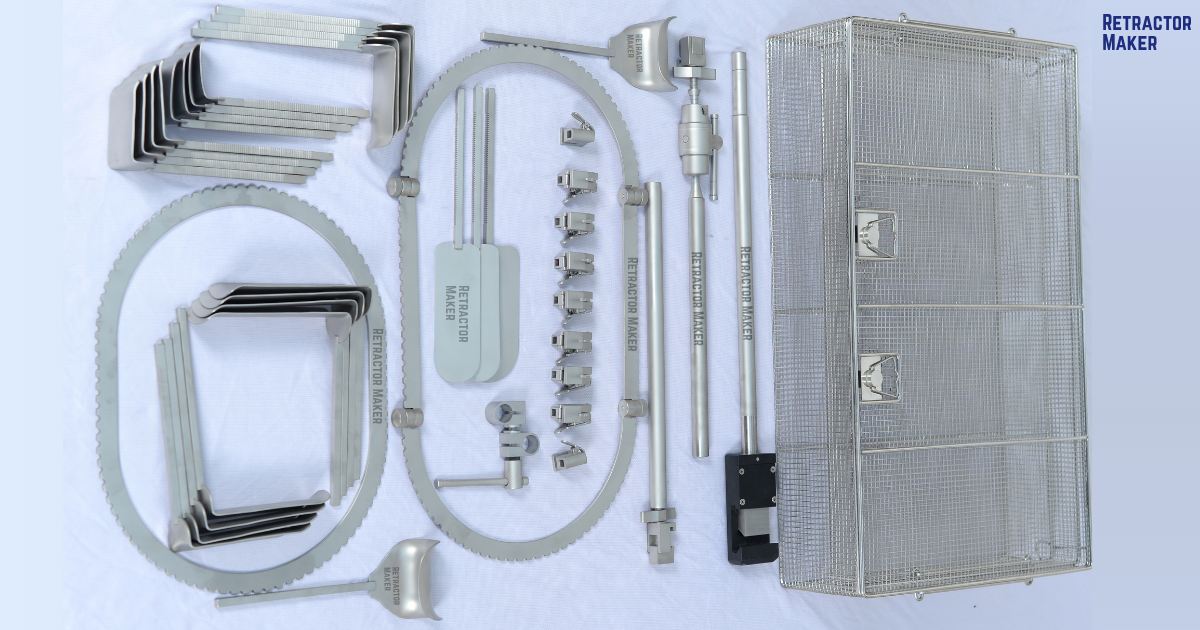
Because the elements are modular, a system can be configured for different exposures by changing the ring, the blades or the supporting components rather than replacing the whole assembly.
How the Bookwalter Retractor Changed Surgical Retraction
The practical difference between a table-mounted self-retaining system and hand-held retraction is where the load is carried. With hand-held retraction, an assistant holds the instrument and the position depends on that person. With a table-mounted system, the frame holds the blade in the position it has been set to.
A structured framework also allows several blades to be positioned around the operative field at once and held there, with each blade adjusted individually. Whether this is appropriate depends on the procedure, the exposure required and the preferences of the surgical team and the institution; a self-retaining system is not universally preferable to other retraction methods.
Bookwalter Retractor and Modern Surgical Practice
Modern Bookwalter Retractor systems follow the same basic concept. The components supplied today are named for the role they play in the assembly:
| Component | Role in the assembly |
|---|---|
| Field Post | Attaches to the operating table and sets frame height and offset |
| Horizontal Bar | Carries the frame across towards the operative field |
| Horizontal Flex Bar | A bar variant offering additional adjustment of the frame |
| Post Coupler | Connects the post and bar components of the frame |
| Retractor Rings | Provide the attachment points around the incision |
| Ratchet Mechanisms | Hold and tension a retractor blade against the ring |
| Retractor Blades | Engage tissue and maintain the exposure |
Complete systems, frame components and blades are all listed on this site. See Bookwalter Retractor systems.
Individual frame components such as posts, bars, rings, couplers and ratchets are listed separately. Browse Bookwalter Retractor parts.
What About the Balfour Retractor?
The Balfour Retractor is a different surgical retractor and should not be described as a Bookwalter Retractor. It is a self-retaining abdominal retractor of its own design, used independently of a table-mounted ring framework.
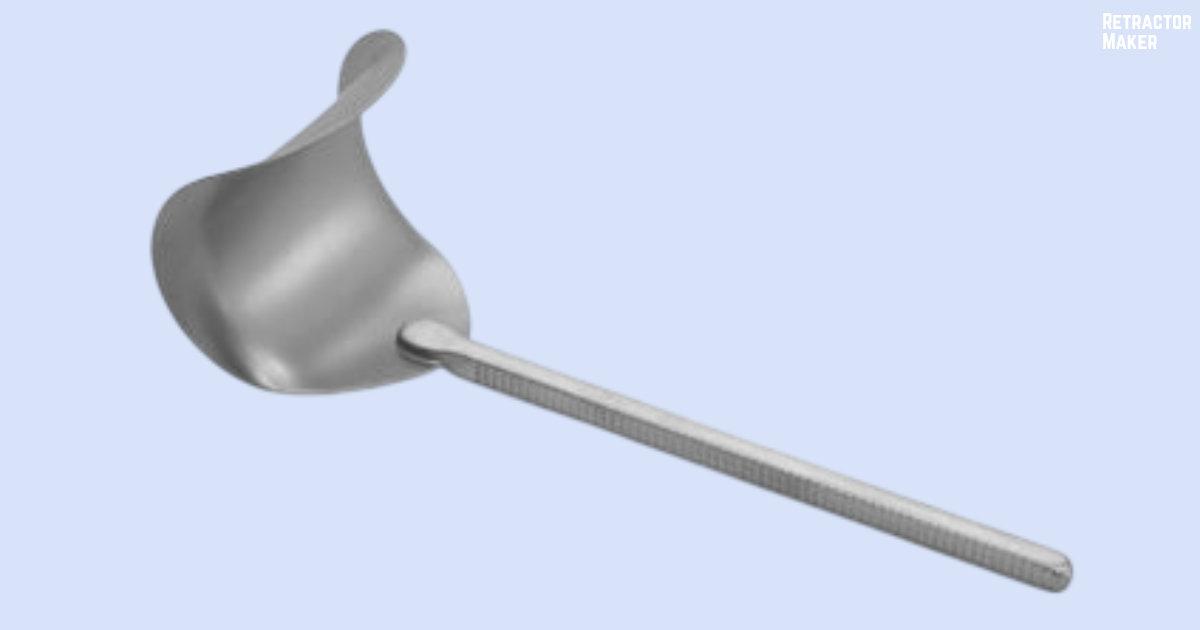
At a high level, the difference is structural: a Bookwalter Retractor is an assembly anchored to the operating table with blades held on a ring by ratchet mechanisms, whereas a Balfour Retractor is a self-contained instrument. Note that Bookwalter systems also use blades described as Balfour-style; the blade name refers to the blade profile, not to the Balfour Retractor itself. We make no claim here about which design came first or which is better.
Perguntas Frequentes
Quem foi o Dr. John Bookwalter?
O Dr. John Bookwalter foi um cirurgião geral americano associado ao desenvolvimento do sistema de afastamento autoestático, fixado à mesa operatória, que leva o seu nome.
Qual é a história do Afastador Bookwalter?
Começou como um conceito para manter a retração cirúrgica numa estrutura fixa à mesa operatória em vez de manualmente, e desenvolveu-se para um sistema modular de postes, barras, anéis, mecanismos de catraca e lâminas intermutáveis.
Por que foi desenvolvido o Afastador Bookwalter?
Para proporcionar retração tecidual estável e ajustável durante a cirurgia aberta, sem a necessidade de segurar continuamente um afastador manual.
Quando foi desenvolvido o Afastador Bookwalter?
Não publicamos uma data de desenvolvimento específica, porque uma data fiável não pode ser verificada a partir das informações disponíveis para nós.
Como o Afastador Bookwalter difere dos afastadores manuais tradicionais?
Um afastador manual é mantido em posição por um assistente. Um Afastador Bookwalter mantém as suas lâminas numa estrutura ancorada à mesa operatória, de modo que a posição definida é mantida pela montagem.
Quais são os principais componentes de um Afastador Bookwalter?
Um poste de campo (Field Post), barra horizontal (Horizontal Bar) ou barra flexível horizontal (Horizontal Flex Bar), acoplador de poste (Post Coupler), anel afastador (Retractor Ring), mecanismos de catraca (Ratchet Mechanisms) e lâminas afastadoras (Retractor Blades).
O Afastador Bookwalter moderno é baseado no conceito original?
Sim. Os sistemas atuais ainda utilizam uma estrutura fixada à mesa, um anel afastador, mecanismos de catraca e lâminas intermutáveis.
Precisa de um Retrator Bookwalter ou Componentes?
Diga-nos o que precisa, incluindo o produto, configuração, quantidade e país de destino. A Retractor Maker pode fornecer disponibilidade, especificações e preços.
Solicitar Orçamento