
Bookwalter Retractors
What Is a Bookwalter Retractor?
Reviewed by Retractor Maker technical team · Updated
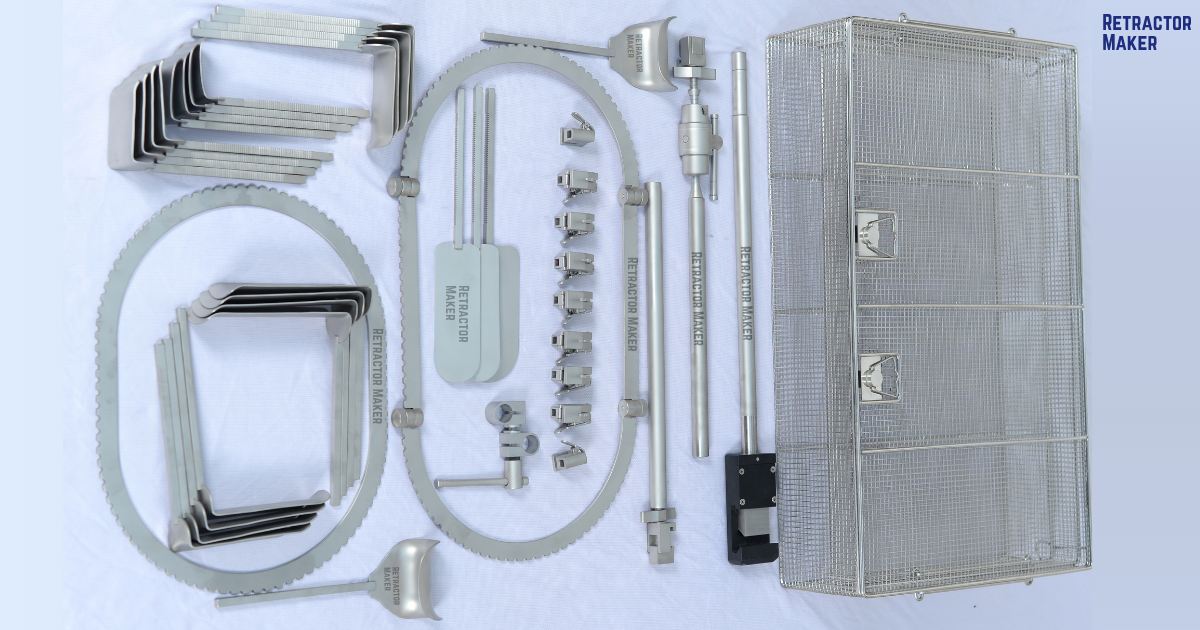
A Bookwalter Retractor is a table-mounted, self-retaining surgical retractor system. It uses a supporting framework, a retractor ring, ratchet mechanisms and retractor blades to help maintain tissue retraction and access to the operative field during open surgery.
A Bookwalter Retractor is a table-mounted, self-retaining surgical retractor system. It is designed to help maintain tissue retraction and provide access to the operative field during open surgery, without an assistant holding a retractor by hand.
The system works as an assembly rather than a single instrument. A supporting framework is attached to the operating table, a retractor ring provides attachment points around the incision, ratchet mechanisms hold the retractor blades, and the blades engage the tissue. Each element can be adjusted to suit the exposure the surgical team needs.
What Is a Bookwalter Retractor Used For?
The general purpose of the system is to hold tissue away from the operative field in a stable, adjustable way for the duration of the procedure. Depending on the configuration selected, it may help provide:
- Stable tissue retraction throughout the procedure
- Hands-free retraction, so the team is not occupied holding instruments
- Access to the operative field
- Adjustable positioning of retractor blades around the incision
- A stable retraction framework anchored to the operating table
Bookwalter Retractor systems may be used in areas such as general surgery, urology, gynecology, and other open surgical procedures where a self-retaining retraction system is appropriate. Not every configuration is suitable for every procedure — the components and blades have to match the surgical requirement.
How Does a Bookwalter Retractor Work?
The operating concept is straightforward. The load of the retraction is carried by the operating table instead of by an assistant.
- The supporting structure is attached to the operating table.
- Bars and other support components form the retraction framework.
- A retractor ring, or a related framework, provides the attachment points.
- Ratchet mechanisms clamp to that framework and hold the retractor blades.
- Blades are positioned around the operative field where retraction is needed.
- The assembly is then adjusted to provide the required exposure.
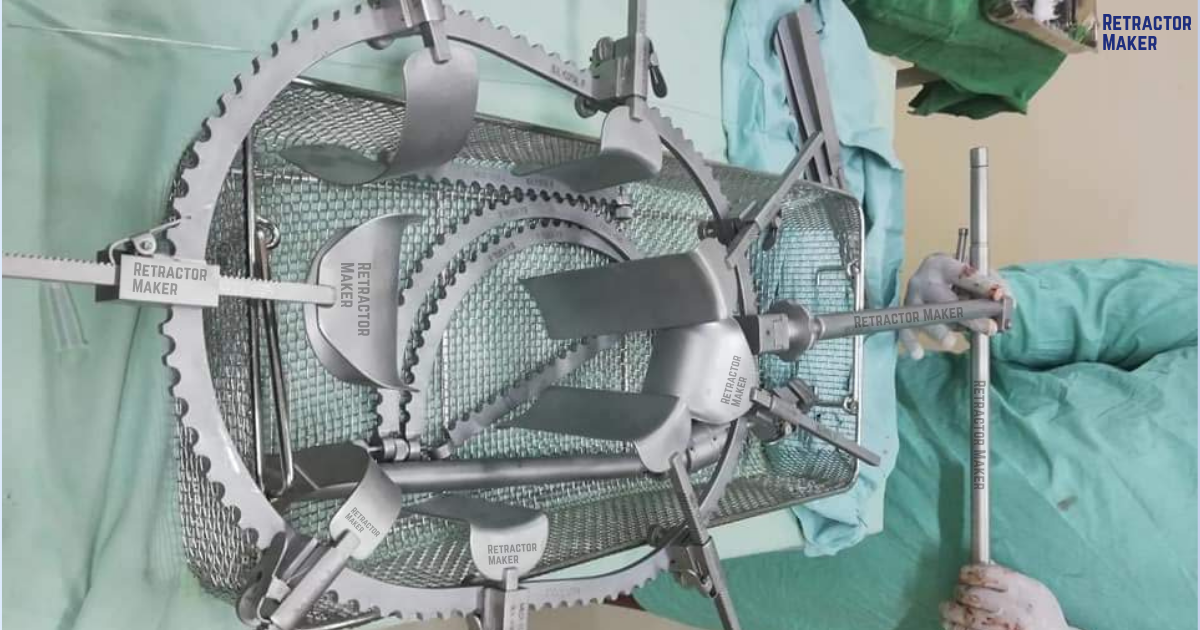
This is a general educational explanation, not instructions for use. Actual assembly and use should follow the manufacturer's instructions and the procedures of the healthcare facility, and should be carried out by appropriately trained surgical professionals.
Main Components of a Bookwalter Retractor
A Bookwalter-style set is built from a small number of component families. Knowing the names makes it much easier to identify a replacement part or specify a new set.
- Field post — the upright that supports the retractor framework.
- Horizontal bar — provides structural support for the system.
- Horizontal flex bar — helps position the retraction framework.
- Post coupler — connects supporting components together.
- Retractor rings — provide the framework for attaching retraction mechanisms.
- Ratchet mechanisms — hold and position the retractor blades.
- Retractor blades — provide the tissue retraction.
| Component | Basic Function |
|---|---|
| Field Post | Supports the retractor framework |
| Horizontal Bar | Provides structural support for the system |
| Horizontal Flex Bar | Helps position the retraction framework |
| Post Coupler | Connects supporting components |
| Retractor Ring | Provides a framework for attaching retraction mechanisms |
| Ratchet Mechanism | Holds and positions retractor blades |
| Retractor Blades | Provide tissue retraction |
Bookwalter Retractor Blades
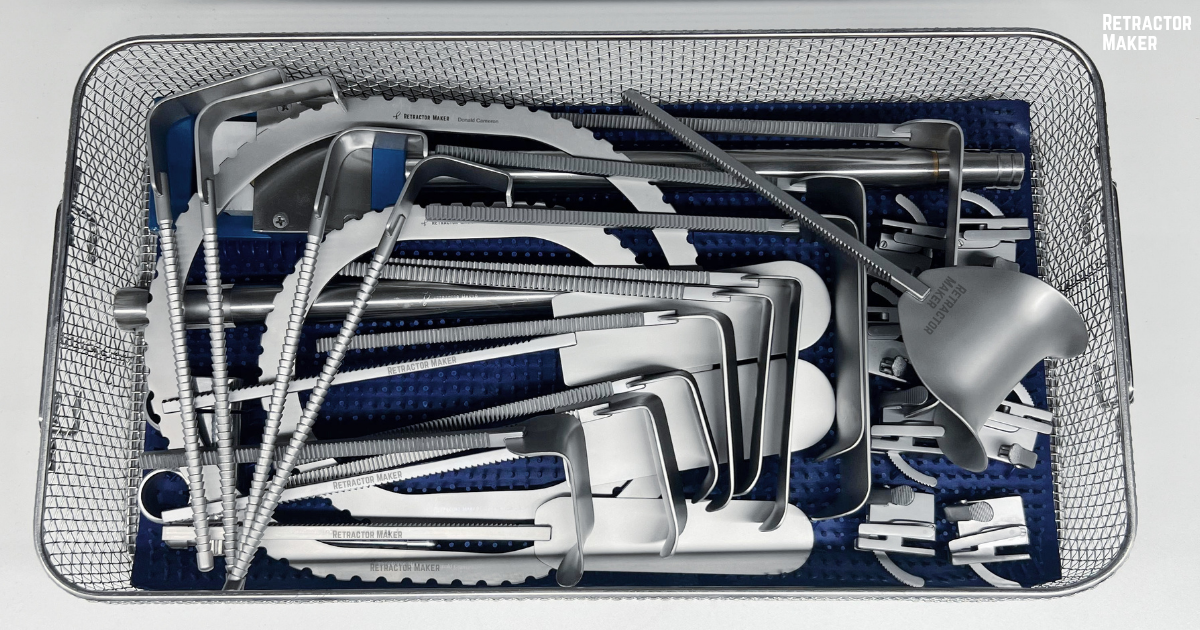
The system can be used with different retractor blades depending on the exposure required and the configuration of the frame. Blades are usually the part of a set that changes most between specialties, while the supporting hardware often stays the same.
- Kelly blades — a deeper profile used where the wall must be held further back.
- Malleable blades — shaped by the surgical team to follow the anatomy where a fixed profile does not fit.
- Other Bookwalter-compatible blade configurations, including Balfour-style, Richardson, Deaver, Harrington and specialised profiles.
Blade width, depth and design all affect how the retraction system is configured, including how many ratchet mechanisms are needed and where they sit on the ring. The right blade depends on the procedure and the surgeon's requirement rather than on any single blade being best. You can see the available profiles on the Bookwalter retractor blades page.
How Is a Bookwalter Retractor Set Up?
A general overview of the working order is:
- Position the support structure on the operating table.
- Attach the required bars and connecting components.
- Position the retractor ring or framework above the operative site.
- Attach the appropriate ratchet mechanisms.
- Select suitable retractor blades.
- Position and adjust the blades as required.
- Check the overall setup before use.
This is a general educational overview only. It is not a replacement for the manufacturer's instructions for use or for institutional surgical procedures.
Where Is a Bookwalter Retractor Used?
General Surgery
In general surgery, a table-mounted system may be used as a self-retaining retraction system in applicable open procedures where stable exposure of the operative field is required.
Urology
Table-mounted retraction systems may be used in appropriate open urological procedures when stable exposure is required and a self-retaining system is considered suitable.
Gynecology
Suitable Bookwalter configurations may be used in gynecological procedures where retraction and operative exposure are required. Ring geometry and blade depth are normally selected to match the approach.
Bookwalter Retractor vs. Hand-Held Retractors
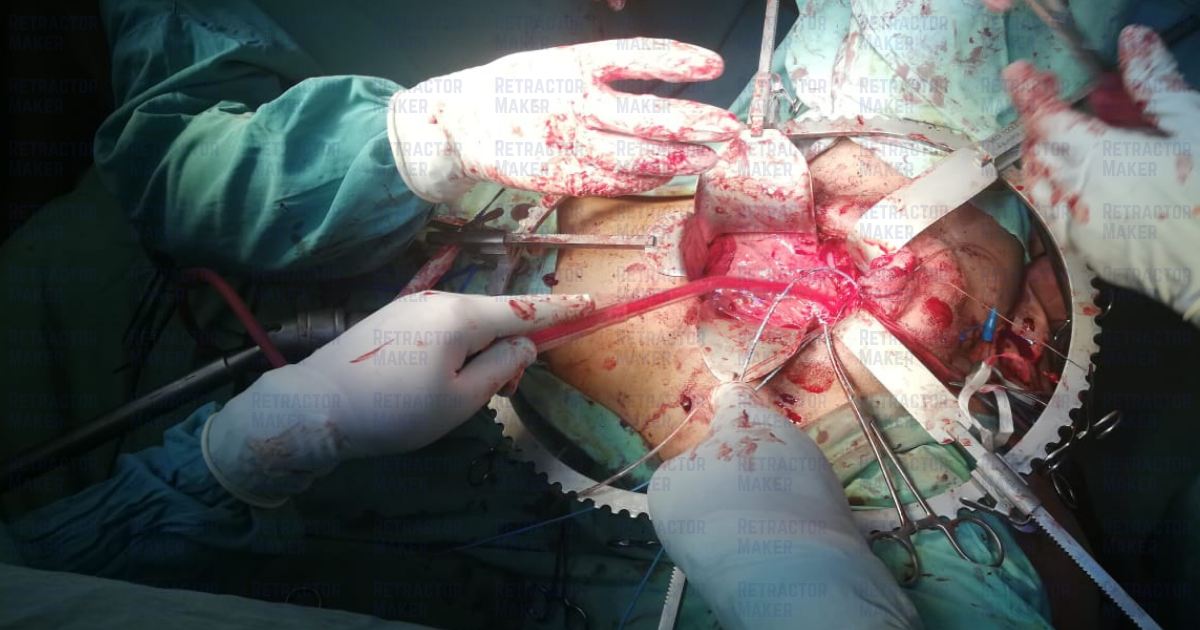
Hand-held retractors generally need to be held in position by a surgeon or an assistant for as long as the exposure is needed. A self-retaining Bookwalter system instead uses a supporting framework and ratchet mechanisms to maintain the position of the retractor blades.
Neither approach is universally better. The appropriate retraction method depends on the procedure, the operative requirements, surgeon preference and the equipment available in the theatre.
How to Choose a Bookwalter Retractor Configuration
Configuration is decided by the surgical requirement. Factors that usually need to be considered include:
- The type of procedure the set must cover
- The operative exposure required
- The surgical field and the approach used
- Ring configuration — shape and size
- Blade type
- Blade size, including width and depth
- The number of retraction points needed around the field
- The supporting components available, such as posts, bars and couplers
Because these factors vary between theatres and specialties, there is no single standard configuration. If you are unsure which components you need, send your requirement through the quote request page.
Frequently Asked Questions
What is a Bookwalter Retractor?
A Bookwalter Retractor is a table-mounted, self-retaining surgical retractor system that uses a supporting framework, a retractor ring, ratchet mechanisms and retractor blades to hold tissue away from the operative field.
What is a Bookwalter Retractor used for?
It is used to help maintain tissue retraction and provide access to the operative field during open surgery. It may be used in general surgery, urology, gynecology and other open procedures where a self-retaining retraction system is appropriate.
Is the Bookwalter Retractor self-retaining?
Yes. It is designed as a self-retaining retractor system: the blades are held in position by ratchet mechanisms on a framework that is supported from the operating table, rather than being held by hand.
What are the main parts of a Bookwalter Retractor?
The main components are the field post, horizontal bar, horizontal flex bar, post coupler, retractor rings, ratchet mechanisms and retractor blades.
What types of blades are available for a Bookwalter Retractor?
Commonly used profiles include Kelly blades, malleable blades and other Bookwalter-compatible blades such as Balfour-style, Richardson, Deaver and Harrington blades. Blade choice depends on the exposure required.
Can Bookwalter Retractor components be purchased separately?
Yes. Complete systems, individual blades and individual parts such as rings, posts, bars, couplers and ratchet mechanisms are listed separately on this website and can be ordered on their own.
How do I choose a Bookwalter Retractor configuration?
Configuration depends on the procedure, the exposure required, the ring geometry, the blade types and sizes, the number of retraction points and the supporting components you already have. Send your requirement and we can help identify a suitable configuration.
Need a Bookwalter Retractor or Components?
Tell us what you need, including the product, configuration, quantity and destination country. Retractor Maker can provide availability, specifications and pricing.
Request a Quote