
Bookwalter Retractors
Bookwalter vs Omni Retractor
Reviewed by Retractor Maker technical team · Updated

Bookwalter and Omni are surgical retraction systems. Both are designed to provide controlled, self-retaining tissue retraction during open procedures.
Their structures and component configurations differ. The right choice depends on the surgical requirement, the equipment already available, the configuration needed, and purchasing requirements.
What Is a Bookwalter Retractor?
A Bookwalter Retractor is a table-mounted, self-retaining surgical retractor system. Its main components are:
- Field post
- Horizontal support components
- Post couplers
- Retractor ring
- Ratchet mechanisms
- Interchangeable retractor blades
Complete systems are listed by surgical application. See Bookwalter retractor systems.
What Is an Omni Retractor?
Omni is a surgical retraction system. It uses a supported frame with its own attachment points to hold the retraction components supplied for that system.
Omni configuration may vary by system. Frame dimensions, component counts, attachment mechanisms and blade options are not stated here; confirm the exact configuration with the relevant manufacturer.
Bookwalter vs Omni Retractor: Main Differences
| Feature | Bookwalter Retractor | Omni Retractor |
|---|---|---|
| System type | Table-mounted, self-retaining surgical retractor system | Surgical retraction system |
| Support structure | Field post, horizontal bars and post couplers | Supported frame with its own attachment points |
| Ring / frame | Solid or segmented retractor rings | Frame-based configuration |
| Blade attachment | Ratchet mechanisms mounted on the ring | System-specific attachment mechanisms |
| Blade options | Multiple Bookwalter-compatible blade profiles | Blade options supplied for the system |
| Configuration | Ring, support components, ratchets and blades | Configuration depends on the specific system or setup |
| Setup | Support is mounted to the table, then framework and blades are positioned | Setup follows the specific system configuration |
Bookwalter Retractor Components
Bookwalter components fall into three groups.
Supporting Components
- Field post — supports the retractor framework.
- Horizontal bar — provides structural support.
- Horizontal flex bar — helps position the framework.
- Post coupler — connects supporting components.
Ring Components
- Solid rings — one-piece ring framework.
- Segmented rings — ring assembled from segments.
Retraction Components
- Standard ratchets — hold and position blades.
- Tilt ratchets — allow blade-angle adjustment.
- Self-retaining ratchets — maintain blade position.
- Retractor blades — provide tissue retraction.
Rings, posts, bars, couplers and ratchets are listed individually. Browse Bookwalter retractor parts.
Blade profiles, widths and depths are listed with each blade product. Browse Bookwalter retractor blades.
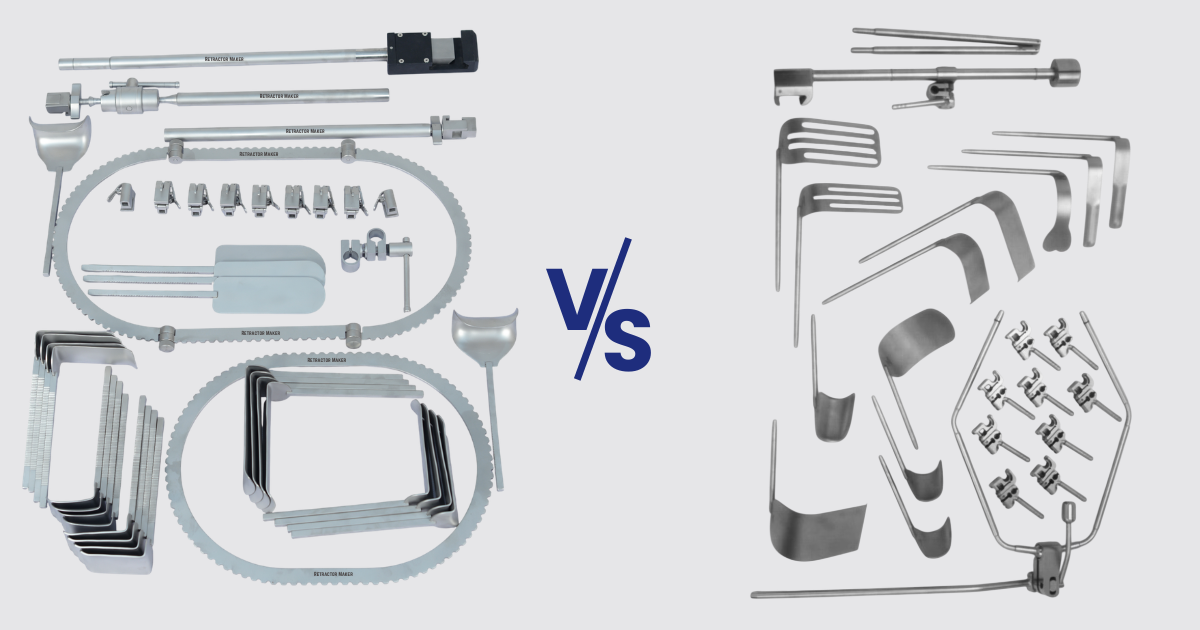
Bookwalter vs Omni Retractor Diagram
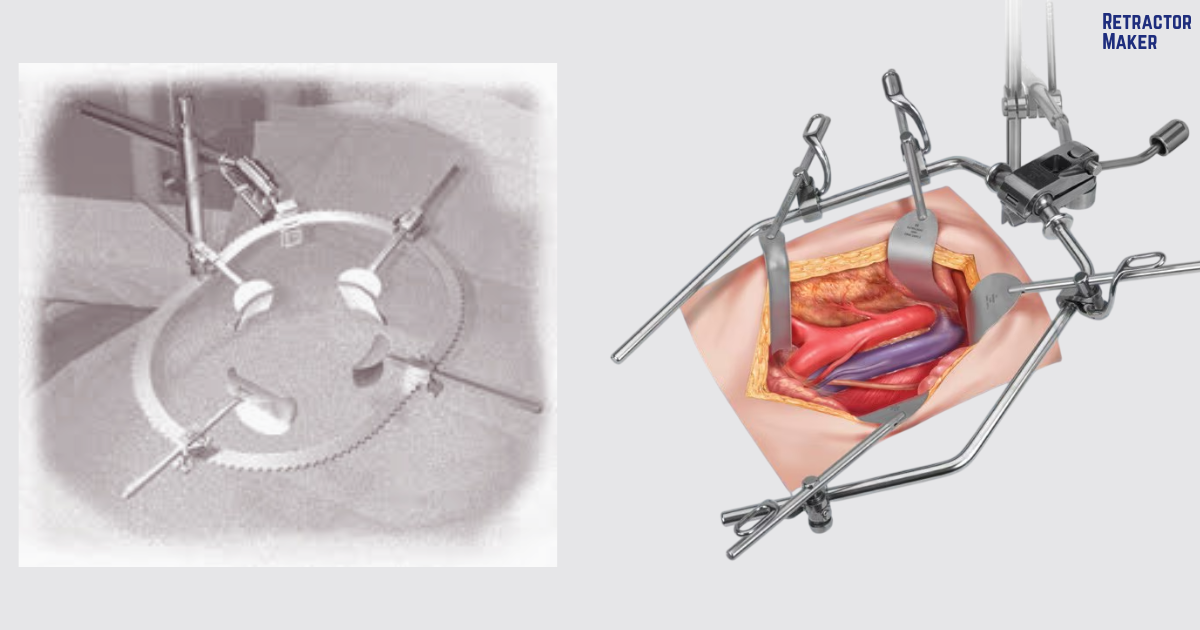
The diagram shows an illustrative arrangement of the two systems around the operative field. It does not represent every possible configuration.
Bookwalter vs Omni During Surgery
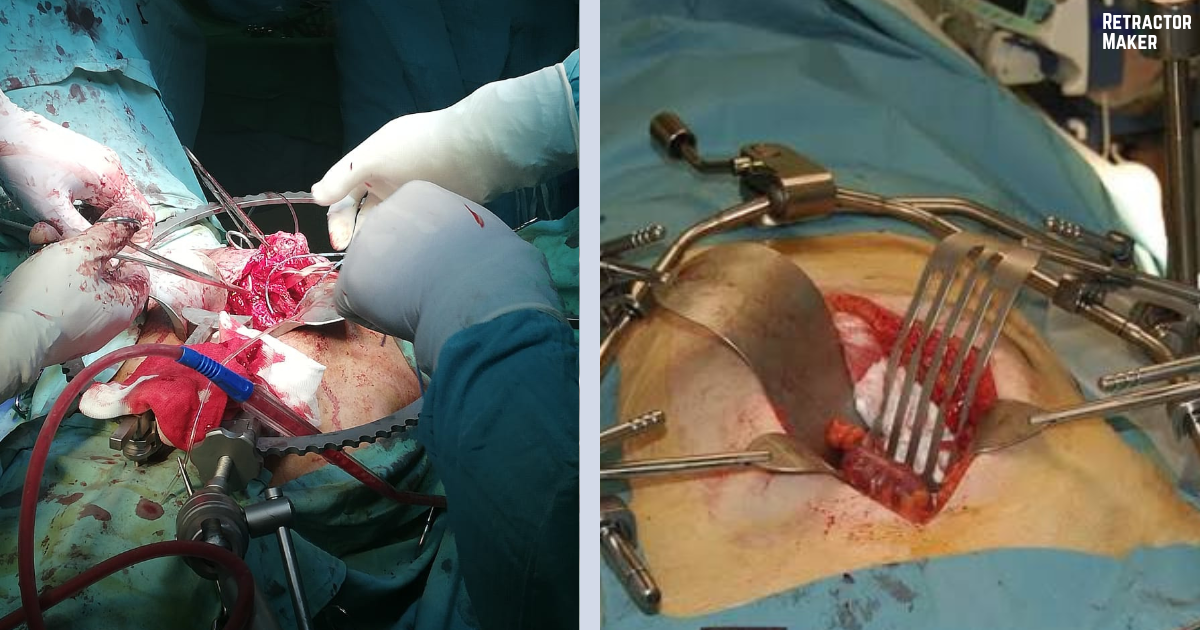
Retractor systems are configured according to the operative field, the required exposure, the available components, and surgical team preferences. The images demonstrate use of the systems and are not a comparison of surgical outcomes.
How to Choose Between Bookwalter and Omni
- Surgical exposure required
- Procedures where the system will be used
- Equipment already available
- Available components
- Required blade configuration
- Ring or framework requirements
- Setup preferences
- Surgeon preference
- Institutional practice
- Replacement component availability
- Budget and purchasing requirements
In practice, the best choice depends on the exposure required, the equipment already available, the desired configuration, and the purchasing needs of the surgical department. How to choose a Bookwalter retractor system.
Bookwalter vs Omni: Quick Summary
Bookwalter Retractor
A table-mounted, self-retaining system built around a retractor ring, supporting components, ratchet mechanisms and interchangeable blades.
Omni Retractor
A surgical retraction system built around its own supported frame and component configuration.
Which One Should You Choose?
There is no universal answer. The appropriate system depends on the surgical requirement, available equipment, configuration, institutional preferences and purchasing needs.
Frequently Asked Questions
What is the difference between Bookwalter and Omni Retractors?
Bookwalter is a table-mounted, self-retaining system built around a supported retractor ring and ratchet mechanisms. Omni uses its own supported frame and component configuration.
Is the Bookwalter Retractor self-retaining?
Yes. The Bookwalter Retractor is a table-mounted, self-retaining surgical retractor system.
Is the Omni Retractor self-retaining?
The Omni system mechanically maintains tissue exposure. The exact mechanism depends on the specific system configuration.
Which is better, Bookwalter or Omni?
There is no universal answer. Selection depends on the surgical requirement, equipment, configuration, institutional preferences and purchasing needs.
Are Bookwalter and Omni components interchangeable?
Do not assume that components are interchangeable. Confirm compatibility with the specific system and component before ordering.
Can I purchase Bookwalter components separately?
Yes. Bookwalter components and parts are available separately where listed on the website: Bookwalter retractor parts (/bookwalter-retractor-parts).
How do I choose the right retractor system?
Start with the required surgical exposure, then consider the available equipment, system configuration, compatible components, replacement parts and purchasing requirements.
Need a Bookwalter Retractor or Components?
Tell us what you need, including the product, configuration, quantity and destination country. Retractor Maker can provide availability, specifications and pricing.
Request a Quote