
Bookwalter Retractors
Bookwalter vs Thompson Retractor
Reviewed by Retractor Maker technical team · Updated
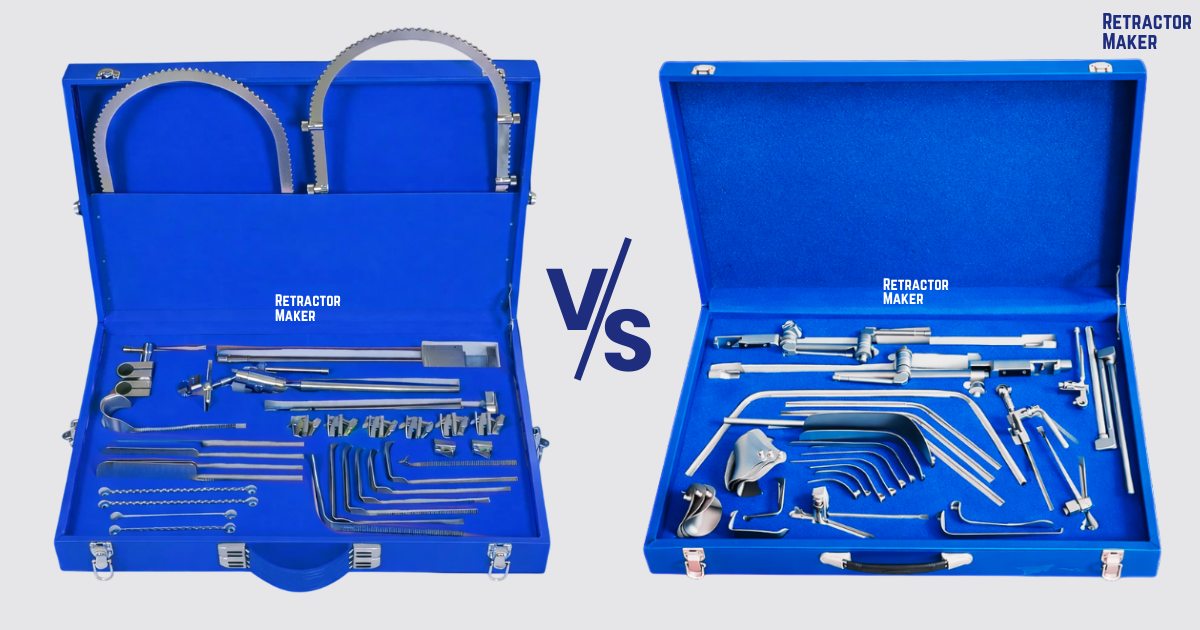
Bookwalter and Thompson are both surgical retractor systems designed to provide self-retaining retraction. Their designs, components, configurations and setup approaches differ, and the suitable choice depends on requirements rather than on one system being universally better.
Bookwalter and Thompson systems are often compared because both are used to provide self-retaining surgical retraction. Both remove the need for an assistant to hold retractors by hand. Beyond that shared purpose, the two systems are built differently.
What Is a Bookwalter Retractor?
A Bookwalter Retractor is a table-mounted, self-retaining system. A supporting framework carries a retractor ring above the incision, blades are attached to the ring through ratchet mechanisms, and the ratchets hold each blade in position to maintain stable exposure. See Bookwalter retractor systems.
What Is a Thompson Retractor?
The Thompson Retractor is also a self-retaining surgical retraction system. It uses a supported frame with attachment points that carry retractor blades, so exposure is held mechanically rather than manually. We supply Bookwalter-style systems and components, so we describe Thompson only in general terms here.
Bookwalter vs Thompson: Main Differences
| Bookwalter Retractor | Thompson Retractor |
|---|---|
| Table-mounted, self-retaining retraction system | Self-retaining surgical retraction system |
| Supporting framework built from field post, bars and couplers | Supported frame assembly carrying attachment points |
| Retractor ring provides fixing points around the incision | Frame and arm geometry provide the attachment points |
| Blades held by ratchet mechanisms on the ring | Blades held at the frame's own attachment mechanisms |
| Wide range of blade options including Kelly, malleable, Balfour, Richardson and Deaver | Blade options as supplied for that system |
| Configured by choosing ring, support components and blade set | Configured according to that system's own component range |
| Used across general, GYN, urology, bariatric and other applications | Used for general self-retaining retraction applications |
This table describes general design approaches only. Specifications should be confirmed against the manufacturer information for the system you are actually using.
Bookwalter and Thompson Components
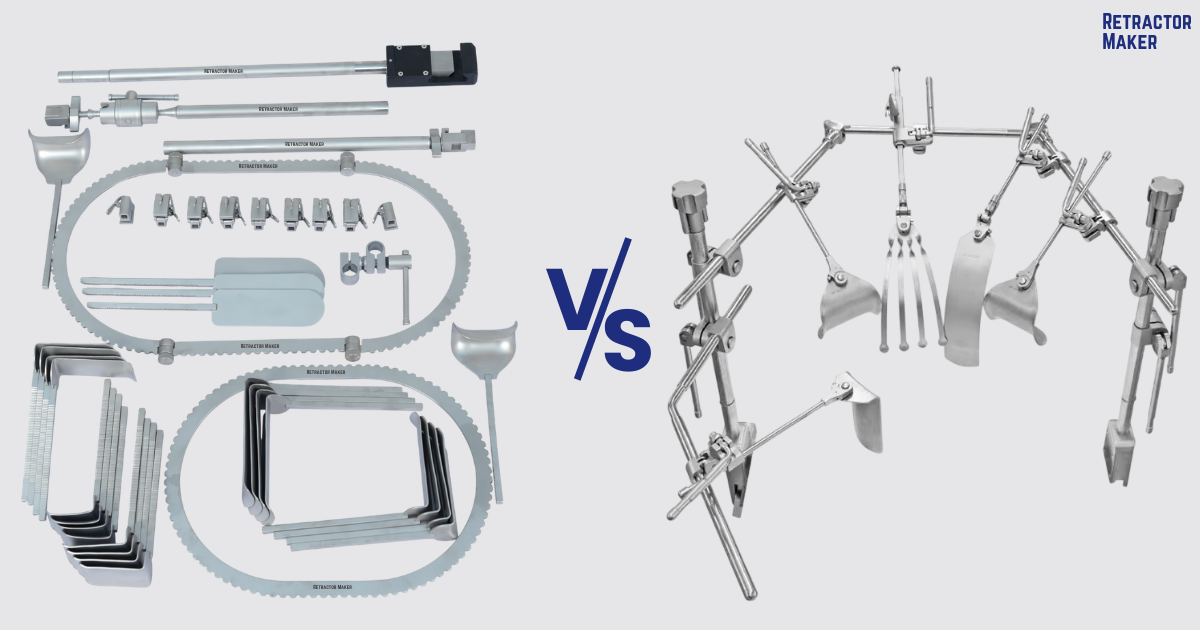
On the Bookwalter side you can see the recognisable parts of the system: oval rings, support posts and bars, ratchet mechanisms and a set of blades. The other system is built around a frame with arms that carry its blades, so the parts are grouped differently even though the purpose is similar.
Bookwalter vs Thompson Diagram
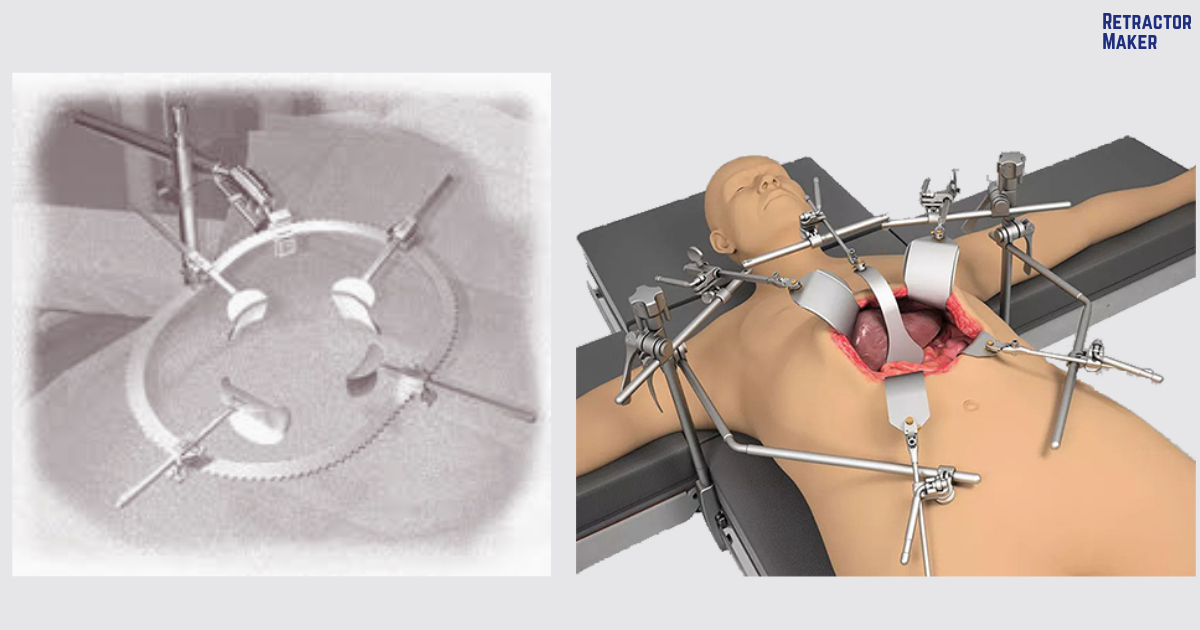
The diagram shows how each system can be positioned relative to the patient and the operating table. It is one illustrative setup for each system and does not represent every possible configuration.
Bookwalter vs Thompson During Surgery
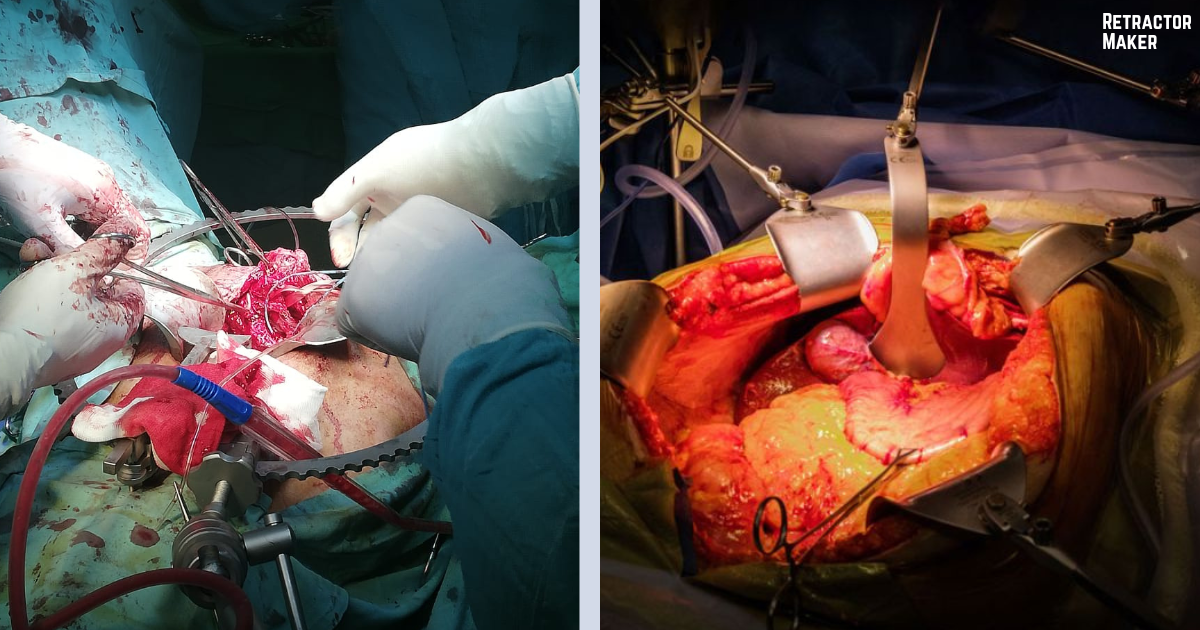
Both systems can be used to support surgical retraction. The actual setup depends on the procedure, the system configuration, surgeon preference and institutional practice.
Which Retractor Should You Choose?
- Surgical application and the exposure required
- Equipment the hospital already owns
- Components available to you
- Blade requirements
- Ring or framework requirements
- Surgeon preference and institutional practice
- Budget and purchasing requirements
- Availability of replacement and additional components
There is no single correct answer. The appropriate system is the one that matches your specific surgical and purchasing requirements.
Bookwalter vs Thompson: Quick Summary
Bookwalter: a table-mounted system configured around a retractor ring, with blades held by ratchet mechanisms and a broad range of interchangeable support components and blades.
Thompson: a self-retaining system configured around its own supported frame and component range, holding blades through that frame.
Choosing between them: base the decision on the surgical application, existing equipment, component availability and purchasing requirements rather than assuming one system is universally better. Browse Bookwalter retractor parts.
Frequently Asked Questions
What is the difference between Bookwalter and Thompson Retractors?
Both provide self-retaining retraction. A Bookwalter system is configured around a retractor ring with blades held by ratchet mechanisms, while a Thompson system uses its own supported frame and component range.
Is Bookwalter a self-retaining retractor?
Yes. It is a table-mounted, self-retaining retractor system.
Is Thompson a self-retaining retractor?
Yes. It is also designed as a self-retaining surgical retraction system.
Which is better, Bookwalter or Thompson?
There is no universal answer. The suitable choice depends on the surgical application, existing hospital equipment, component availability, surgeon preference and purchasing requirements.
Are Bookwalter and Thompson components interchangeable?
They are separate systems with their own components, so interchangeability should not be assumed. Always confirm compatibility against the actual product information before ordering.
Can I request a specific Bookwalter configuration?
Yes. Send the ring, support components and blade requirements through the quote form and we will confirm what we can supply.
How do I choose between Bookwalter and Thompson?
Start from the exposure required and the equipment already in use, then compare which system's components and blades you can obtain and maintain most easily.
Need a Bookwalter Retractor or Components?
Tell us what you need, including the product, configuration, quantity and destination country. Retractor Maker can provide availability, specifications and pricing.
Request a Quote